What’s Obvious to You Isn’t Obvious to Your Customers

Companies know their own businesses extremely well. They know the terminology, the product families, the technical differences, the applications, the history and all the small details that have accumulated over years of working in the industry.
The problem is that customers don’t arrive with all of that knowledge. They arrive with their own context, usually a question, problem or decision they’re trying to make. What feels completely obvious from inside the company may require several connections for someone looking in from the outside.
This is where communication can start to break down. Sometimes there isn’t enough information to understand the picture. Other times there is so much information that it becomes difficult to know what matters. In both cases, the customer is left doing more of the work.
The Outsider’s Perspective
I’m rarely an expert in a new client’s industry when we first start working together. I actually think that’s useful.
When we begin working with a B2B or technology company, we usually receive a mix of existing materials: their website, presentations, product sheets, brand guidelines and whatever else they have available. There is rarely a shortage of information about the company itself. What’s harder to find is often the context around that information. Who specifically are these products for? How does the portfolio fit together? Why would someone choose one solution over another? Who are the closest competitors? Where is the company genuinely different? Why should any of this matter to the audience they’re trying to reach?
Sometimes the answers exist, but they’re spread across different documents or different people. An engineer might explain the technical advantages of a product, while someone in sales talks about the reasons customers actually choose it. People naturally describe a business from the perspective of their own role, and it can take some work to put those perspectives together.
So we ask questions. We research terminology, look at competitors, use search and AI tools, and try to map products to categories, industries and applications. Sometimes we write our own explanation of what we think the company is telling us and ask the client to correct it. It’s often easier for someone to tell us what we got wrong than to explain everything clearly from scratch.
Sometimes we even find ourselves looking at a competitor’s website because they’ve done a better job of explaining the market, product categories or applications. We can then map that understanding back to our client and start asking better questions. If we have to leave your own materials and use search, AI tools or even competitor websites to understand where your company fits, there’s a good chance potential customers are doing the same.
When We Have to Fill in the Gaps
We don’t need to understand a client’s technology at the same depth as their engineers, and their technical customers may know far more about the subject than we ever will. But being an outsider gives us a useful perspective on what the company’s communication assumes people already know.
A placeholder asks someone to imagine what’s missing. Business communication can do the same thing. When the relationships between products, applications, audiences and benefits exist only in the heads of the people inside the company, customers are left to fill in those gaps themselves.
The people inside the company already have years of context surrounding that information. Everyone else has to build that context from what the company gives them.
Start With Fresh Eyes
Try explaining your company without relying on internal terminology, product codes or knowledge someone would only have after working there for years. What seems obvious internally may be exactly where an outsider gets lost.
Ask Someone to Explain It Back
After presenting your company, product or service, ask someone unfamiliar with it to explain what they think you do. The gaps between their explanation and yours can reveal where important connections are missing.
Look Beyond Your Own Website
Compare how competitors describe similar products, categories and applications. The goal isn’t to copy them. It’s to see whether someone else is making the market easier to understand than you are.
Information Needs Context
Context doesn’t mean removing technical information or simplifying everything for the broadest possible audience. For many of the B2B companies we work with, the audience includes engineers, procurement teams and other people with deep industry knowledge. They understand the terminology and often need detailed specifications to properly evaluate a product.
But even accurate information becomes more useful when there’s a meaningful reference point around it.
Imagine a product claims 97% efficiency. An engineer knows what efficiency means, but the number alone doesn’t necessarily tell the whole story. How does 97% compare with the previous generation or a common alternative? Under what conditions was it measured? What does the difference enable in practice? Depending on the product, perhaps it means less heat, lower energy consumption, a smaller system or better performance.
A Specification Isn’t the Whole Story
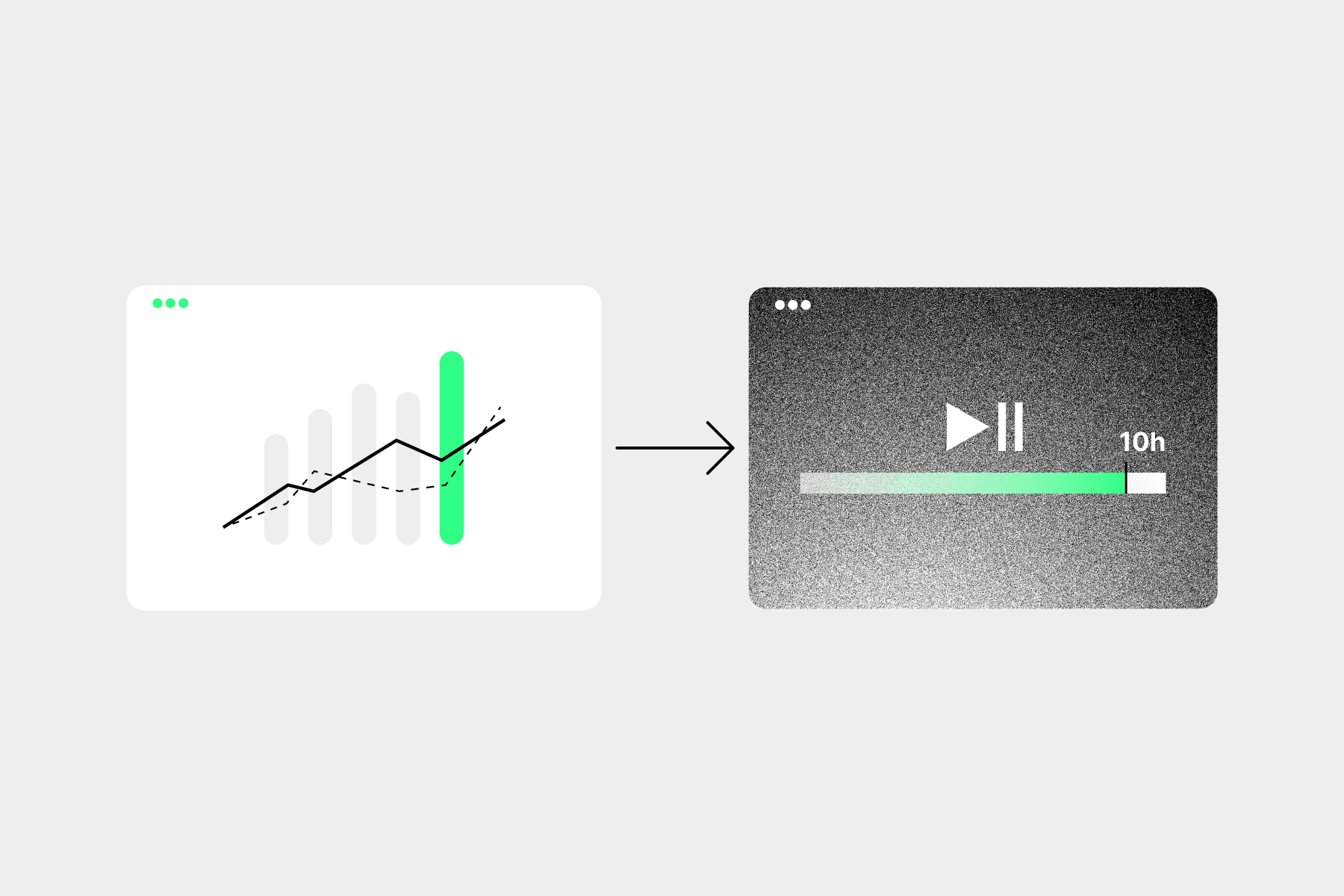
A simple consumer example makes the distinction easier to see. Tell me a device has an 8,000 mAh battery and you’ve given me an accurate specification. Tell me it lasts 10 hours and I have a much better reference point. Tell me I could watch the entire Lord of the Rings trilogy on a single charge and I can actually picture what that battery life means.
Each layer of information serves a different purpose. The specification provides precision. The comparison gives it meaning. The real-world example helps someone relate it to something they already understand.
The same principle applies to technical products. A photograph on a white background shows what the product looks like. Showing that product in an application helps explain where it fits. A list of features tells someone what it can do, while connecting those features to a problem, performance requirement or outcome helps explain why they matter.
The same issue shows up when people try to find or understand a company online. Internal product names, acronyms and categories may make perfect sense inside the business, but they need to be connected to the language people actually use when searching for a solution. Increasingly, that also means giving search engines and AI systems enough context to understand what a product is, where it fits and what it’s used for.
Good context doesn’t replace technical information. It makes the significance of that information easier to understand and evaluate.
Give Numbers a Reference Point
A specification can be accurate without being meaningful on its own. Where useful, show how a number compares with an alternative, previous generation or relevant benchmark so the audience can understand its significance.
Connect Features to Outcomes
Don’t stop at what a product does. Explain what that capability enables. Lower heat, smaller size, easier integration, longer life or lower energy use may make the technical advantage easier to evaluate.
Show Products in Context
A clean product image is useful, but an application can explain much more. Showing where a product is used helps people understand its role, scale and relevance without requiring another paragraph of explanation.

Context Is About Relevance, Not Volume
There is another side to the problem. Providing more context doesn’t mean providing every piece of information you have.
In fact, one of the most common challenges we deal with is exactly the opposite. Companies want to say everything. A brief might start with a main message and several products, then gradually accumulate more capabilities, awards, certifications, partner logos, funding logos, brand messages and additional products. Empty space starts to look like somewhere else we could communicate something.
We see this across trade-show booths, presentations, brochures, advertisements and websites. Eventually there can be so much required information that it becomes difficult to establish any meaningful hierarchy. The issue isn’t necessarily the design. Even the best designer in the world can’t make everything the most important thing on the page.
Not Everything Needs Equal Attention
That instinct is understandable. Different people inside a company see value through different lenses. Engineering may care about performance, efficiency, durability or build quality. Sales may focus on pricing, competitive advantages or the reasons customers choose one solution over another. Marketing may want to communicate the brand, awards, partnerships and broader company story. None of those perspectives is necessarily wrong.
The job is to decide which information matters to this audience, in this context, at this moment.
A procurement team evaluating a supplier needs different context from an engineer comparing products. Someone seeing your company for the first time at a trade show needs something different from a customer reading a detailed technical product page. A homepage, sales presentation, product sheet and case study shouldn’t all try to communicate the same amount of information in the same way.
This is where a clear picture of the customer becomes useful. If you understand who someone is, what they’re trying to accomplish and what they need to evaluate at that point, it becomes much easier to decide what deserves their attention.
We often find companies have extensive information about themselves but a limited picture of their ideal customers. Without that perspective, communication naturally starts with What do we want to say? rather than What does this person need to understand?
Decide Who Comes First
Not every audience needs equal priority in every communication. Identify the person you most need to reach, then make sure their questions and priorities shape what appears first.
Give Everything a Job
Before adding another message, logo, award, certification or product, ask what job it is doing. If it doesn’t help the audience understand, evaluate or take the next step, it may not need to be there.
Use Different Touchpoints Differently
A trade-show wall, homepage, product page and technical datasheet have different jobs. Trying to make every touchpoint tell the complete company story usually makes each one less effective.
Start With Their Context
When we’re trying to understand an unfamiliar product or business, we tend to come back to a few basic principles:
- Know who you’re talking to. Be specific about the audience and don’t assume every customer needs the same information.
- Respect what they already know. Technical audiences don’t need everything translated into beginner language.
- Give information a reference point. Put specifications, statistics and claims into enough context for their significance to be understood.
- Show where things fit. Connect products to categories, applications, audiences, problems and alternatives.
- Decide what matters now. Not every capability, certification, product or message needs equal attention in every communication.
The goal isn’t to explain everything or make complex information simple. It’s to give the right audience enough accurate and relevant context to understand what they’re looking at, why it matters to them and where it fits.
At Level™, we help B2B and technology companies work through these questions across brand strategy, messaging and website design. If your business has become difficult to explain from the outside, get in touch.